


The Selenga Expedition on October 4-7, 2025
On October 4-7, 2025, an automobile expedition (led by A.P. Fedotov) within the State Assignment № 0279-2021-0005 “Study of transformations of the state of reservoirs and watercourses of Eastern Siberia in seasonal and long-term aspects under climate change, geological environment and anthropogenic loads” was carried out to the Republic of Buryatia.
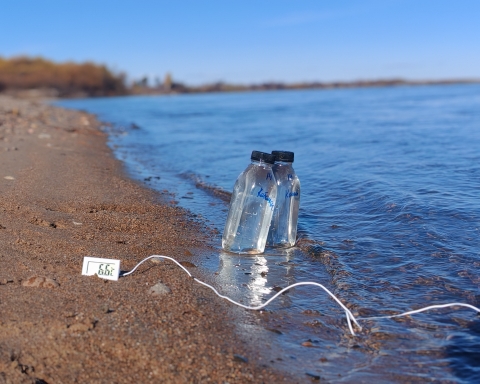
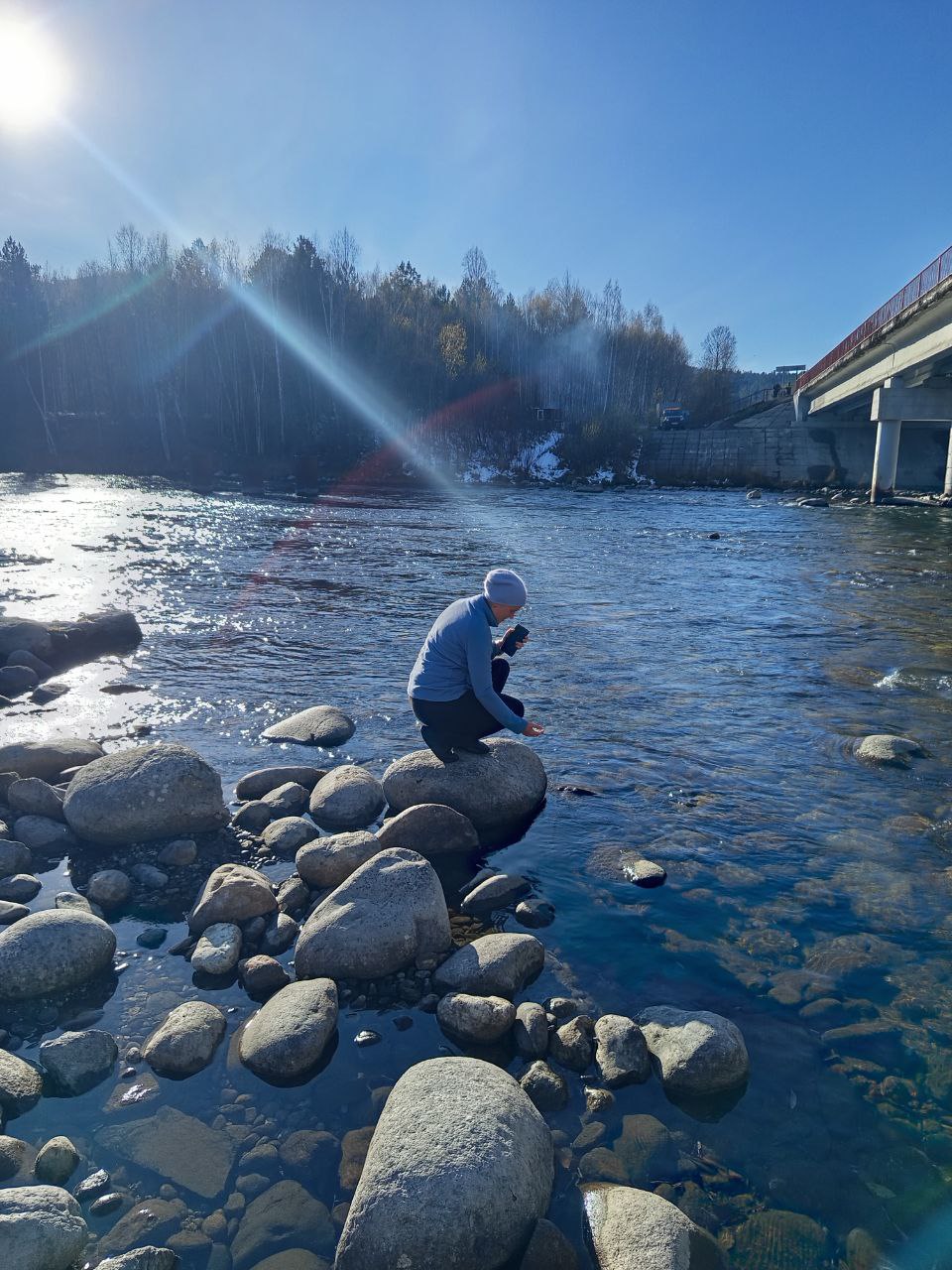
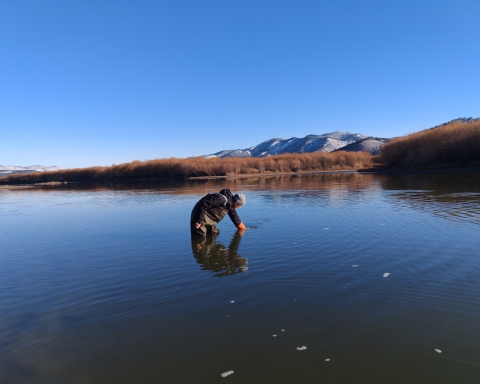
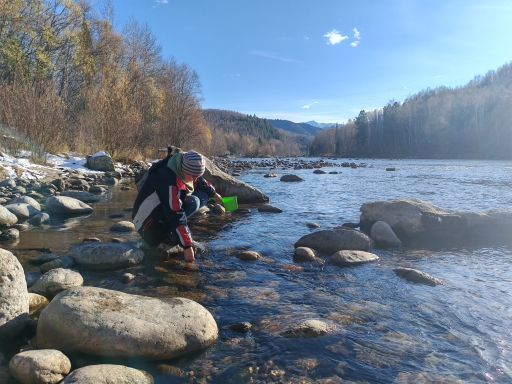
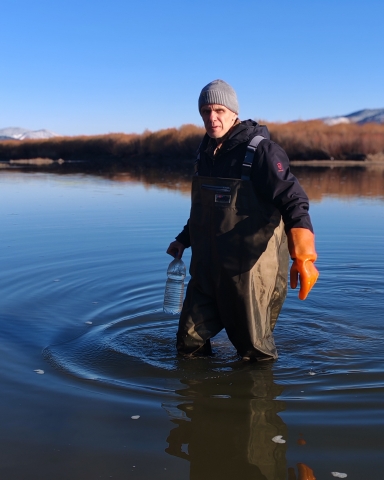
During the expedition, the study of the seasonal dynamics of the components of the chemical and sanitary-microbiological composition of the waters of the Selenga River and its tributaries in the Russian Basin section, as well as tributaries of the Southern Baikal, originating in the Hamar-Daban offsets, was ongoing. The results obtained will enable an assessment of the quality of watercourses during the autumn period. Besides, water samples were collected to study environmental DNA (eDNA) of river populations of the Baikal sturgeon (Acipenser baerii baicalensis).
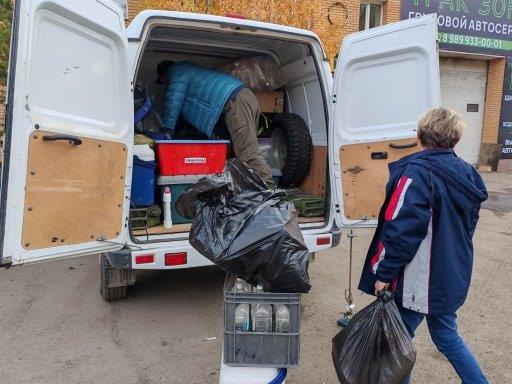
The expeditionary team consisted of: Senior Researcher I.V. Tomberg, Senior Researcher Suslova M.Yu., Senior Researcher Kirilchik S.V. and driver Zamkovoi F.A.
During the expedition, the samples were collected:
- on the Selenga River, from the border with Mongolia (the settlement of Naushki) to the delta (the settlement of Murzino), including its main tributaries within the territory of Russia (the rivers Dzhida, Chikoi, Temnik, Bayangol, Khilok, and Uda);
- at the mouth sections of the tributaries of Southern Baikal (rivers Utulik, Solzan, Khara-Murin, Snezhnaya, Pereyomnaya, Mishikha).
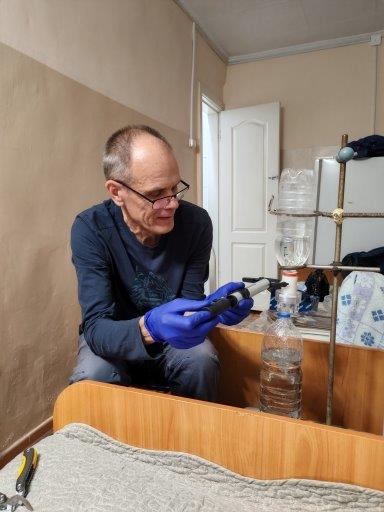
A total of 21 samples were collected. The temperature, pH, and electrical conductivity were measured on-site in the water. Samples of river water were filtered and preserved for laboratory analysis to determine the levels of dissolved oxygen, major ions, nitrogen compounds, phosphorus, silicon, and organic matter.
Table – Temperature, hydrogen index, and electrical conductivity in the water of the studied rivers, October 2025.
|
Watercourse |
рН |
Т, °С |
Ec25, |
|---|---|---|---|
|
Selenga River (Naushki settlement) |
8.41 |
9.9 |
289.3 |
|
Selenga River (Zarubino village) |
8.33 |
9.9 |
292.4 |
|
Dzhida River |
8.12 |
8.8 |
297.6 |
|
Selenga River (Selenduma settlement) |
8.16 |
8.3 |
226.4 |
|
Temnik River |
7.63 |
5.1 |
124.9 |
|
Bayangol River |
8.05 |
7.6 |
461.9 |
|
Selenga River (Novoselenginsk settlement) |
8.39 |
8.1 |
286.6 |
|
Chikoi River |
7.79 |
8 |
89.03 |
|
Selenga River (Dede-Sutoi settlement) |
8.32 |
7.8 |
253.1 |
|
Khilok River |
7.86 |
5.6 |
142.4 |
|
Selenga River (upstream of Ulan-Ude) |
8.21 |
7.6 |
227.9 |
|
Uda River |
7.84 |
4.2 |
143.1 |
|
Selenga River (downstream of Ulan-Ude) |
8.11 |
6.8 |
224.6 |
|
Selenga River (Kabansk settlement) |
8.07 |
6.2 |
205.9 |
|
Selenga River (Murzino village) |
8.09 |
6.3 |
206.9 |
|
Mishika River |
7.43 |
3.40 |
86.35 |
|
Pereyomnaya River |
6.65 |
4.1 |
60.55 |
|
Snezhnaya River |
7.61 |
4.9 |
111.5 |
|
Khara-Murin River |
7.17 |
3 |
82.47 |
|
Solzan River |
7.47 |
3.5 |
83.28 |
|
Utulik River |
7.69 |
1.6 |
242.8 |
River waters were studied for sanitary-microbiological indicators: total coliform bacteria (TCB), E. coli and enterococci, according to SanPiN 1.2.3685-21 “Hygienic standards and requirements for ensuring the safety and (or) harmlessness of human habitat factors”, the number of which for surface waters should not exceed 500, 100 and 10 CFU/100 cm3, respectively. TCB is the most sensitive indicator for identifying sources of fecal contamination, including minor ones. The presence of E. coli and enterococci indicates fresh fecal contamination entering the water.
Research has indicated that the water samples from the Selenga River throughout the studied section were non-standard, with the exception of the sample taken upstream of Ulan-Ude, where no exceedances were observed. The maximum recorded values of TCB were observed in the vicinity of the settlement of Naushki and the village of Zarubino, measuring 4,700 CFU/100 cm3 (a 9.4-fold increase) and 5,100 CFU/100 cm3 (a 10.2-fold increase), respectively; number of E. coli in Naushki was 1,200 CFU/100 cm3 (a 10.2-fold increase), respectively; number of E. coli in Naushki was 1,200 CFU/100 cm3 (a 12-fold increase); and number of enterococci in the area of Zarubino was 82 CFU/100 cm3 The tributaries of the Selenga River are: Dzhida, Bayangol, and Uda rivers, they exceeded the standards, with the maximum levels of coliform bacteria (900 CFU/100 cm3) and enterococci (102 CFU/100 cm3) observed in the Bayangol River. Water samples from the rivers Temnik, Khilok, and Chikoi met the standards of SanPiN for surface waters.
Based on the analysis of the Lake Baikal tributaries, all six rivers studied met the standards for surface water, where the number of coliform bacteria varied from 0 to 90 CFU/100 cm3, E. coli – ranged from 0 to 2 CFU/100 cm3 , and enterococci from 0 to 8 CFU/100 cm3, The Khara-Murin River met the drinking water quality.
To analyze the eDNA of river populations of the Baikal sturgeon, water samples (each consisting of 2 liters) were filtered through glass filters, which were subsequently placed in test tubes with 95% ethanol. Further, eDNA will be extracted from the filters. The obtained extracts will be analyzed using quantitative PCR and molecular metabarcoding of the target DNA fragments. The data obtained will enable to supplement the information on the distribution of Baikal sturgeon within the research area.