
Limnological Institute
Siberian Branch of the Russian Academy of Sciences
+7 (3952) 42-65-04
info@lin.irk.ru

Limnological Institute is a research institution for complex interdisciplinary studies of Lake Baikal and other water bodies of Siberia.

The main activities of the Institute are to obtain and apply new knowledge in the fields of biology, chemistry, physics, geology and geography by conducting fundamental research aimed at understanding processes of formation and functioning of aquatic ecosystems, diversity and evolution of aquatic organisms, and mechanisms of biological speciation, as well as to carry out search and applied studies in these fields.  Main research areas of the Institute:

  • Limnology: mechanisms of speciation, biodiversity and evolution of lacustrine systems;
  • Current state and forecast of development of inland water bodies and streams;
  • Live systems: comprehensive studies of aquatic organisms by methods of classical and molecular biology, and related sciences.

The Institute is a successor of the Baikal Limnological Station, the first institution of the Academy of Sciences in Siberia founded in 1928.

In 1961, according to the Resolution of the Presidium of the USSR Academy of Sciences No. 49 of January 20, 1961, the Station was reorganized into Limnological Institute of the Siberian Branch of the USSR Academy of Sciences.

Personalities created the history of Lake Baikal studies.

Gleb Vereshchagin, a world-famous limnologist, was the first Director of the Baikal Limnological Station. He initiated comprehensive biological, hydrological and geochemical studies at Lake Baikal. History of first expeditions.

Grigory Galazy Academician, was the first Director of Limnological Institute. He formed the staff at the Institute, succeed in setting up a modern research fleet at Lake Baikal, and invited scientists from different regions of Russia and foreign countries to investigate Lake Baikal.

Michael Grachev Academician, headed the Institute from 1987 to 2015.

To-date, Andrey Fedotov, Dr. Sc. (Geology and Mineralogy), is Director of the Institute.

Structure and staff of the Institute:

LIN SB RAS includes 1 department and 14 laboratories.
The Institute employs 337 people, including:

  • 132 researchers, of them 28% are under the age of 39;
  • 15 doctors of sciences;
  • 104 candidates of sciences;
  • 6 professors;
  • 13 associate professors.

The most important results of the Institute in basic research:

  • Ascertainment of the causes of mass mortality of Baikal seals (6,000 seals died between 1987 and 1988): virus epizootic caused by morbillivirus (canine distemper virus); the first evidence of this virus in seals.
  • Reconstruction of Baikal sedimentary paleoclimate records for the past 8 million years and sub-recent climate records; continuous paleoclimate records of the continent could be obtained only at Lake Baikal; all the results were pioneering. The work was carried out in a broad international and Russian cooperation. 
  • A system of search and mapping of near-surface occurrence of methane hydrates and gas production developed and tested at Lake Baikal . The work was carried out in collaboration with scientific and educational institutions of Russia and European and Asian countries.

Baikal-Evolution-2026, 21 August

Friday, 21 August 2026. East coast of Lake Baikal–transit to the east coast of Olkhon Island

At 10:00, the participants visited the lighthouse. The excursion was educational, combining an exploration of the coastal landscape.

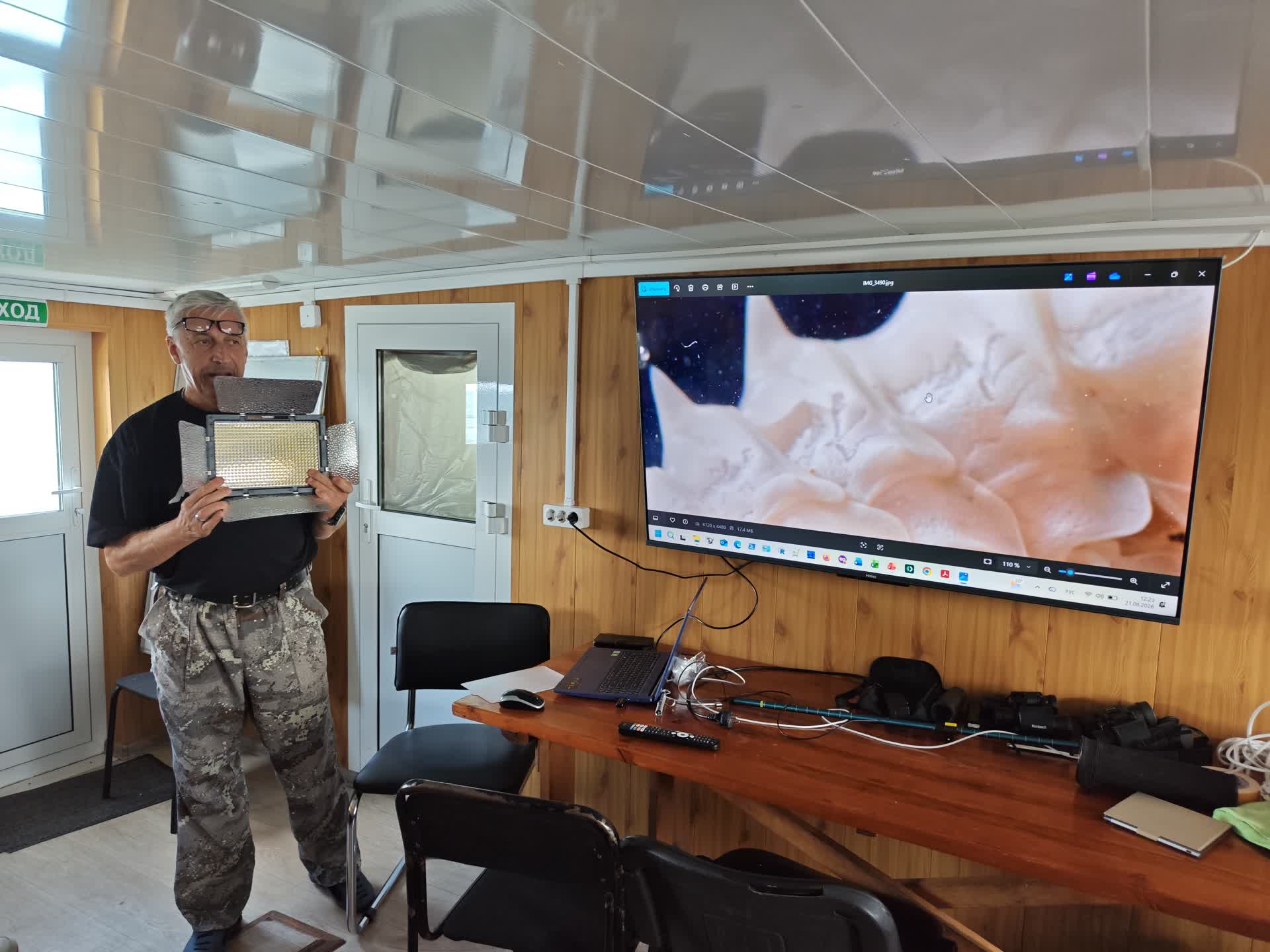
At 12:00, Vasily S. Koval (a leading specialist at IC&G SB RAS) delivered a lecture titled “Scientific photography”. The lecture covered the principles of photographing biological specimens, requirements for illustrative material in scientific publications, techniques for macro- and microphotography, the use of lighting and scalebars, as well as procedure for appropriate image post-processing (i.e., without distorting the data).

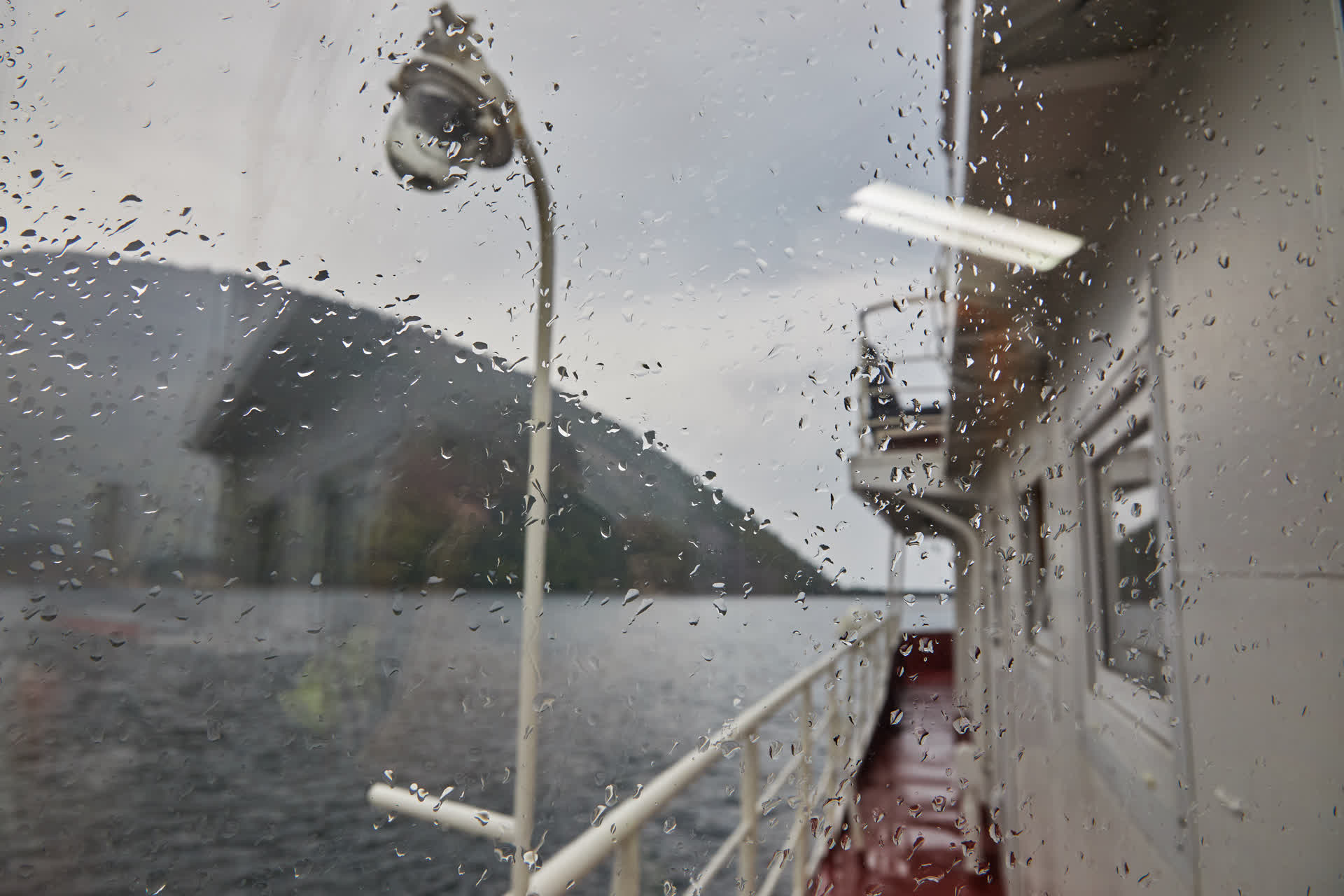
In the afternoon, the vessel moved away from the east coast of the lake due to a sharp deterioration in weather, steering clear of the approaching storm. The team arrived at the east coast of Olkhon Island where the weather allowed for work to continue.

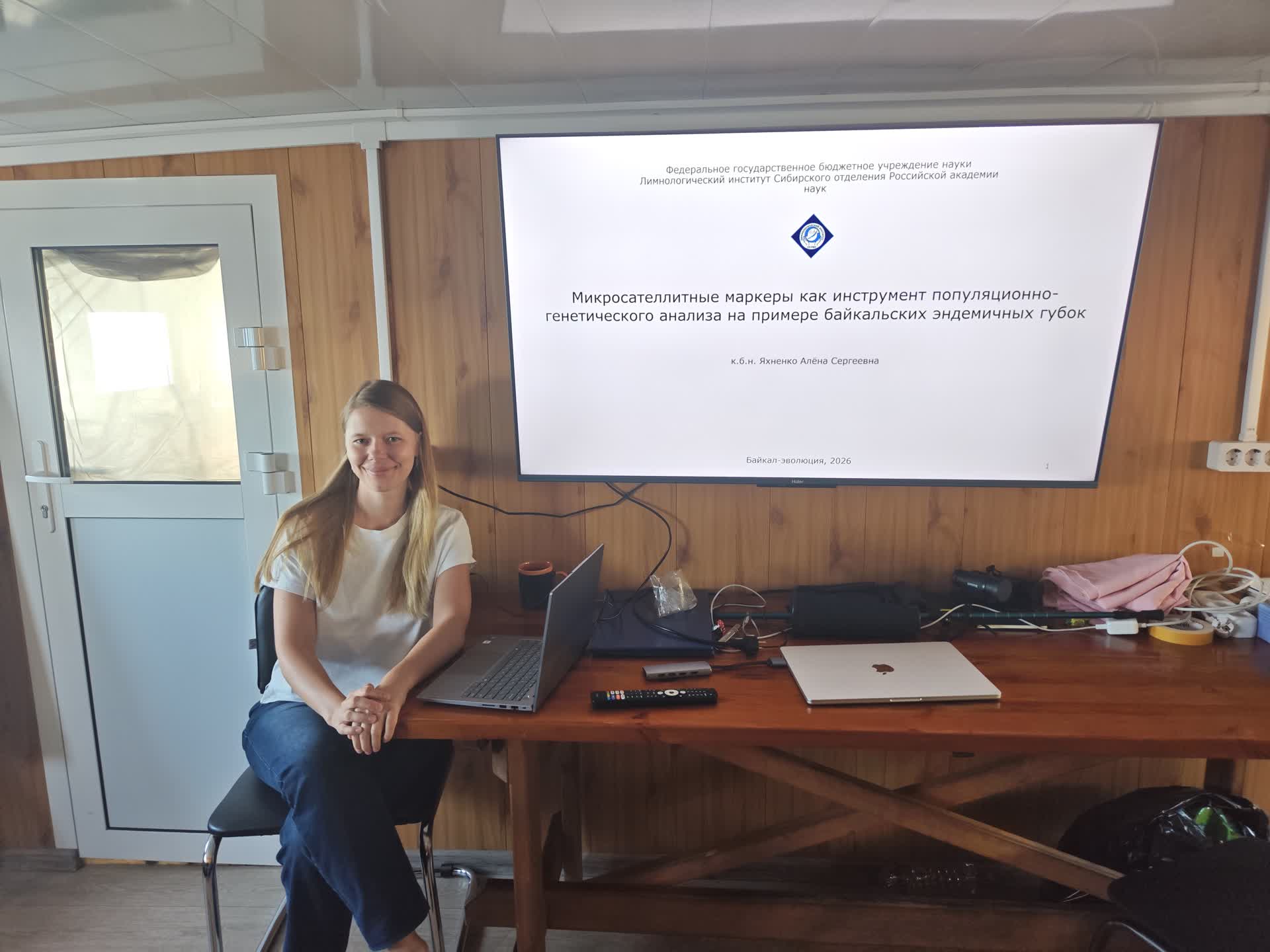
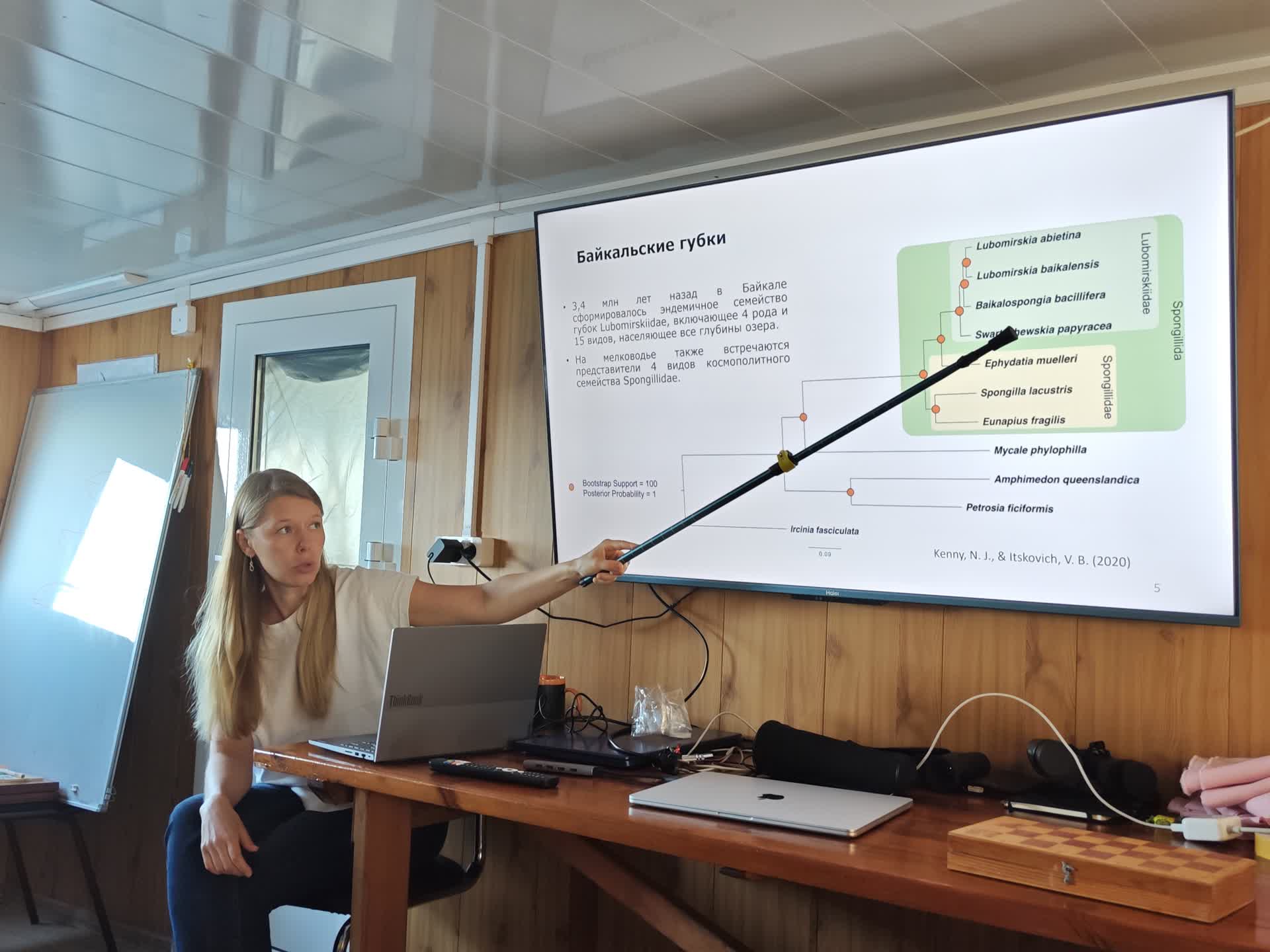
At 16:00, Alyona S. Yakhnenko (a research fellow at the Laboratory of Ichthyology, LIN SB RAS) delivered a lecture titled “Microsatellite markers as a tool for population genetic analysis: a case study of Baikal endemic sponges”. The speaker demonstrated that standard barcoding markers–ITS and CO1–do not provide sufficient resolution for Baikal sponges and are essentially uninformative for population analysis. The main part of the lecture focused on the development of custom microsatellite markers, including strategies for identifying microsatellite loci, the selection and optimization of primers, methods for testing and validating the resulting markers, as well as the application of these tools to assess the population structure of endemic sponges in Lake Baikal.

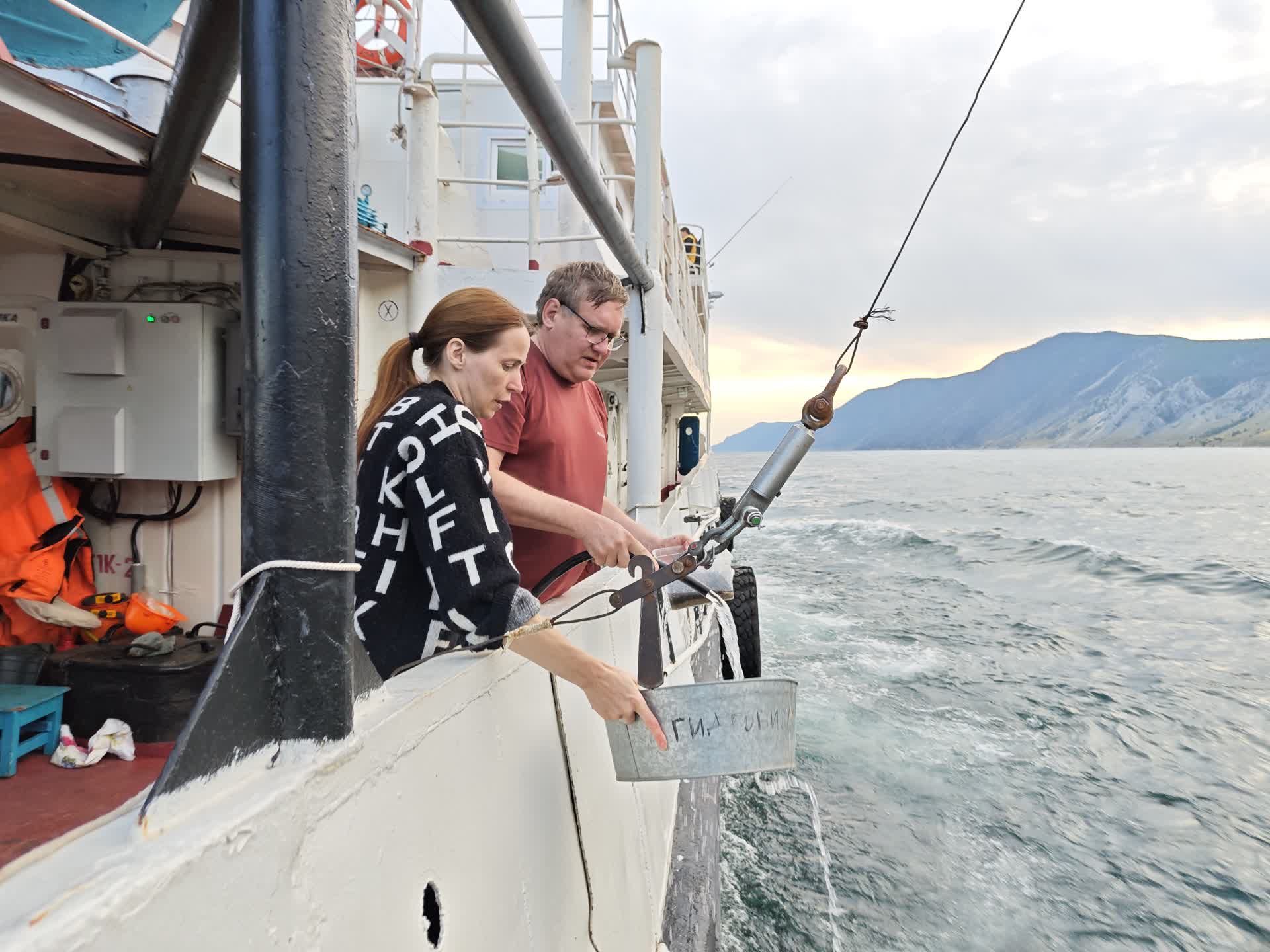
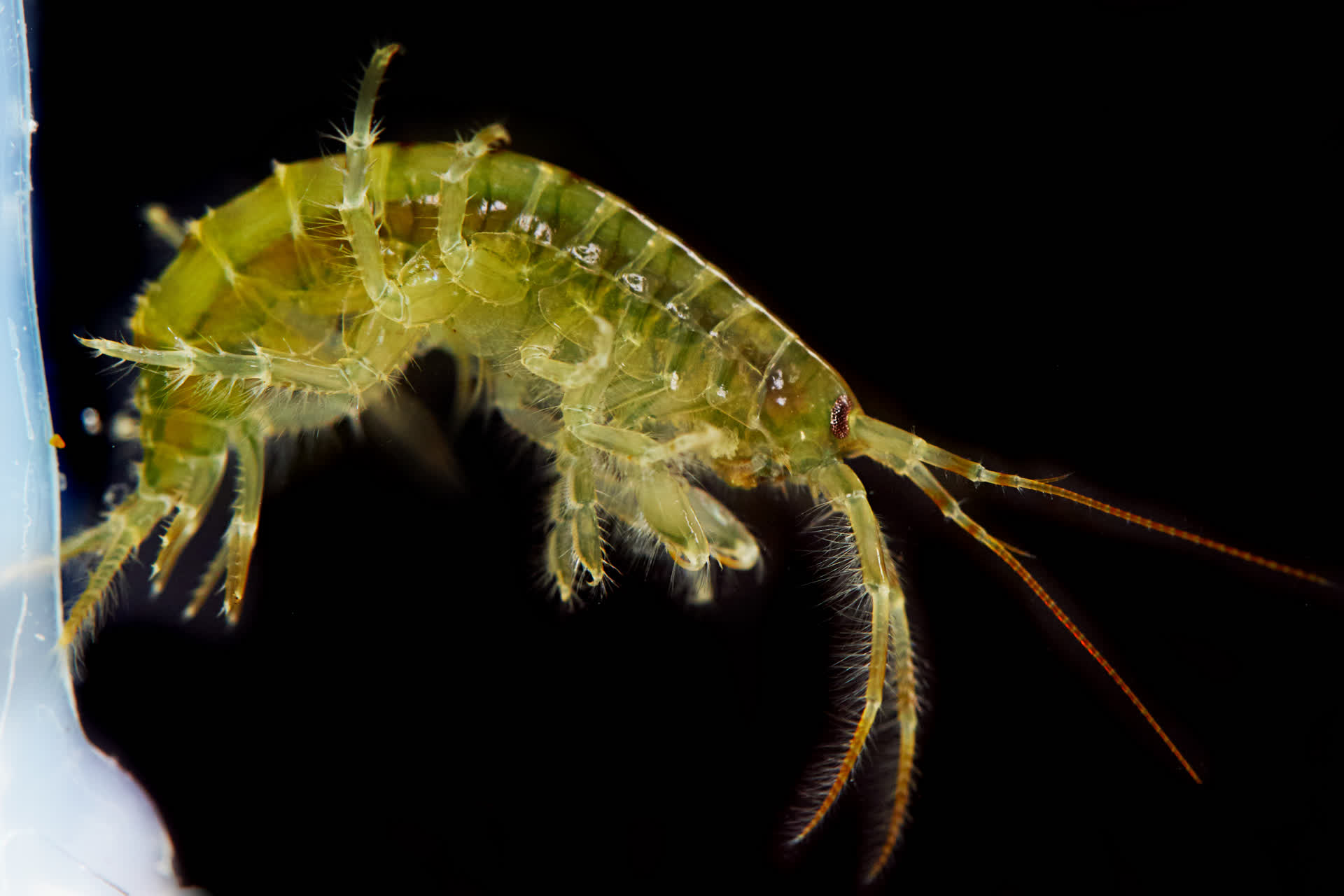
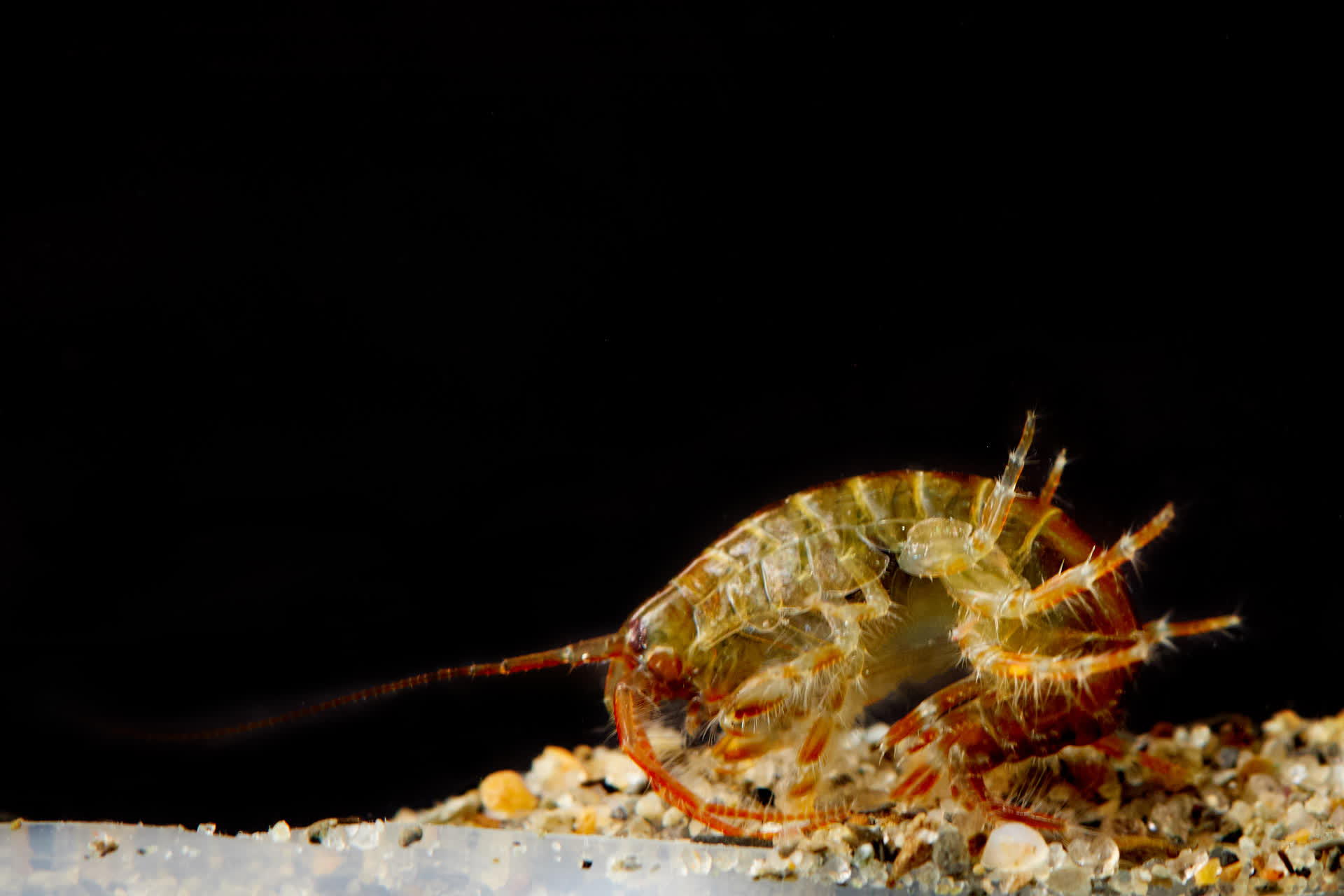
At 18:00, a dredge was deployed off the east shore of Olkhon Island. The haul began at 53.217935 and ended at 53.218255 and 107.658740. The sample contained cladocerans Chydorus sp. and Alona sp.